
Why Real Estate Mentoring Matters When Knowledge Is Cheap

Real estate professionals in professional business attire are gathered around a sleek wooden conference table, deeply engaged in a strategic discussion. The table is covered with printed architectural floor plans, digital tablets displaying market data charts, and a small 3D model of a modern apartment building. One person points to a specific area on a map while others lean in with attentive expressions. Large floor-to-ceiling windows in the background reveal a clear view of a metropolitan skyline during the day, filling the room with bright, natural light.

For a long time, your professional advantage came from knowing something other people did not. You knew which neighborhoods were beginning to change, which lenders were flexible, or which operating expenses were commonly underestimated. That knowledge advantage still exists, but it is becoming harder to protect. Artificial intelligence, searchable databases, automated underwriting tools, online education,…

Read More

How to Build an AI Strategy for Real Estate Companies
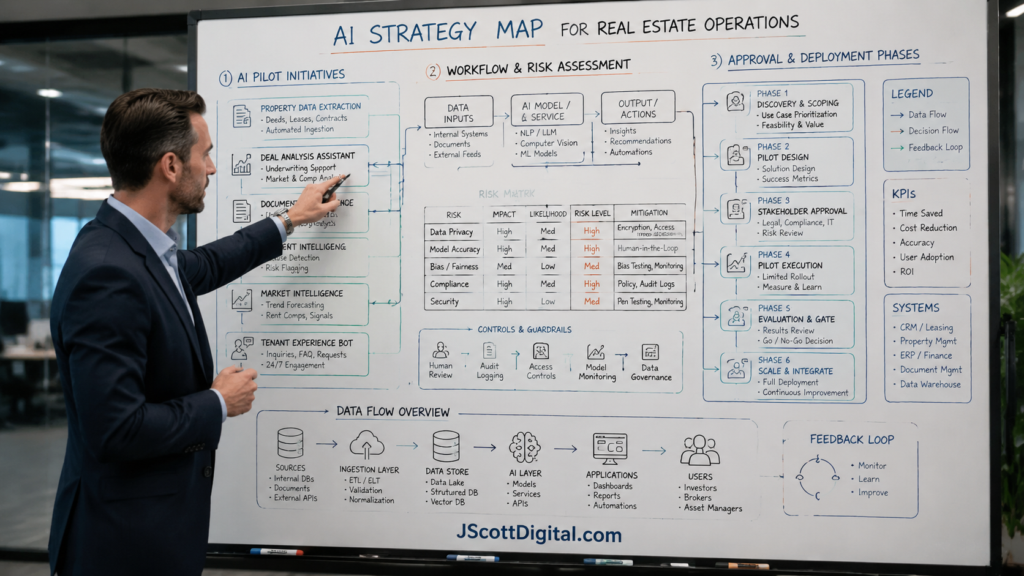
A real estate executive stands before a large strategy board, meticulously outlining AI pilot initiatives, workflow risk assessments, and sequential approval phases. The board is filled with interconnected diagrams, process flowcharts, and technical notations relevant to real estate technology. At the very bottom edge of the board, the text "JScottDigital.com" is clearly visible. The scene maintains a professional office environment, focusing on the detailed content of the strategy map and the executive's engaged posture.

Artificial intelligence is moving quickly into everyday business operations. Real estate firms are using it to organize documents, draft content, analyze information, respond to routine questions, and reduce administrative work. The appeal is obvious: faster output, lower production costs, and more capacity without immediately adding staff. The difficulty is deciding where AI belongs in your…

Read More

How to Think Clearly Across Real Estate Market Cycles
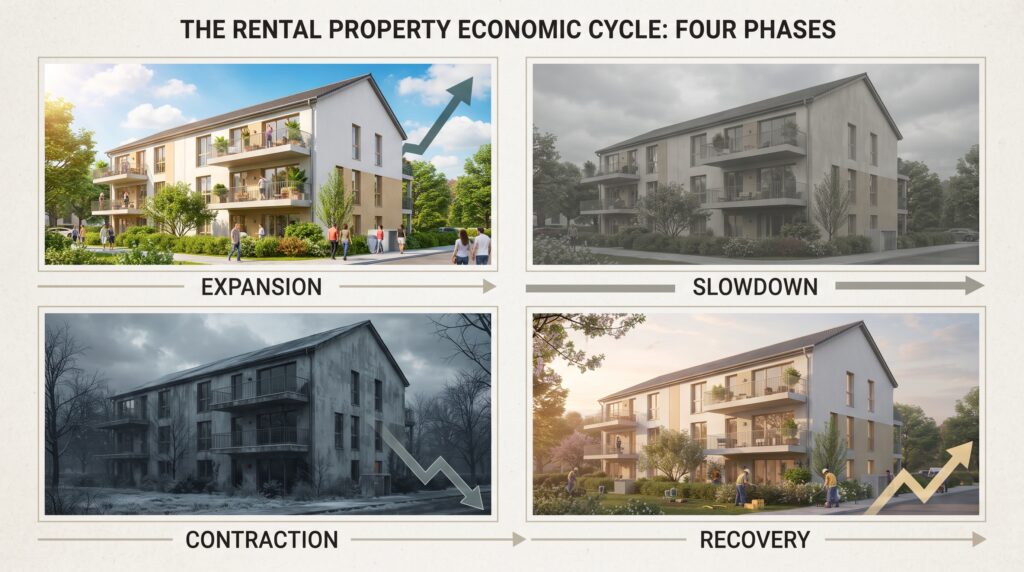
Transform the four-panel architectural graphic of the rental property to reflect economic cycles: the expansion panel should have vibrant sunlight and saturated colors; the slowdown panel features muted tones and overcast lighting; the contraction panel uses cold, desaturated hues and deep shadows; and the recovery panel displays a warm, soft morning light with refreshed textures, maintaining the original building structure and composition throughout.

Real estate market cycles create a predictable behavioral problem: investors become most confident when conditions have been favorable for an extended period and most cautious after values, transactions, and sentiment have already weakened. That pattern encourages you to buy aggressively when competition is intense and retreat when pricing may finally begin to reflect risk. Thinking…

Read More