How To Keep Consistent Real Estate Brand Messaging Everywhere
October 14, 2026
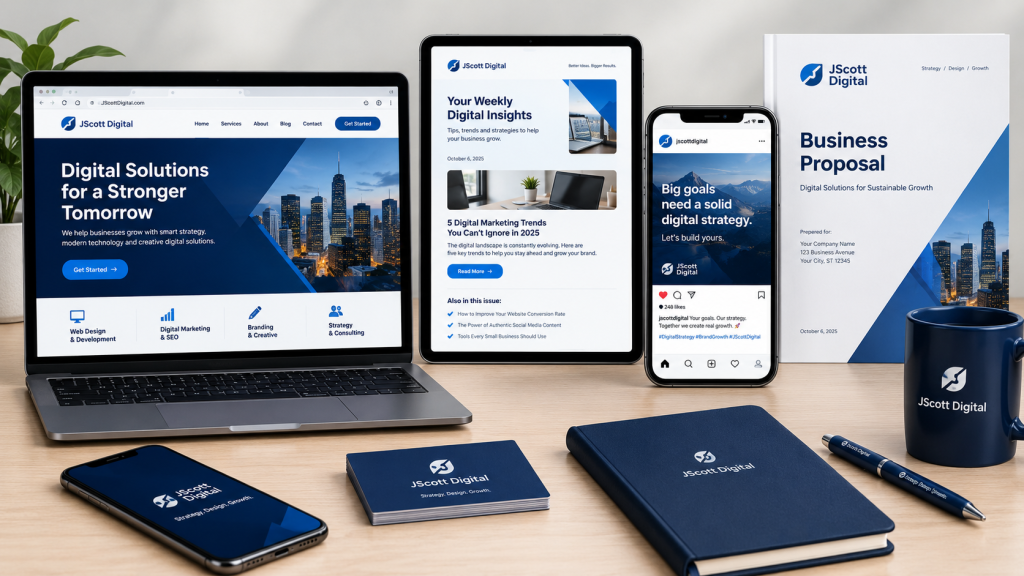
A prospect reads your website, opens a newsletter, sees a LinkedIn post, and later receives a proposal. If each channel describes the same service differently, the company starts to look less focused even when every individual piece seems polished.
That is the operational problem behind consistent real estate brand messaging. Identical copy is not the goal. The same positioning, terminology, claims, and recognizable visual cues should carry from one platform to the next while the format and tone adjust to the setting.
The answer is better control rather than constant rewriting. A shared reference, clear channel rules, approved terminology, and periodic cross-platform reviews keep small inconsistencies from turning into several versions of the same brand.
Identify Where the Brand Changes Between Platforms
Before you build new guidelines, compare what customers already see. Put the homepage, one major service page, a recent newsletter, several social posts, a current proposal, and a frequently used sales deck side by side.
Look for differences that change how someone understands the company, not every harmless wording variation. Small changes in phrasing are fine until they alter the audience, service, claim, or tone.
Website
Email or social
Why it creates a problem
“Real estate investment advisory”
“Investment consulting”
The service appears to change names
“For experienced rental owners”
“For landlords of all sizes”
The target audience becomes unclear
“25+ years of experience”
“More than 20 years”
Both may be true, but the brand looks poorly maintained
“Research-led market analysis”
“Data-driven insights”
The second phrase weakens a more specific position
Nielsen Norman Group’s research on cross-channel consistency found that people benefit when content and visual design feel connected across channels, even when each channel adapts to its context. The same principle works for a real estate company: the medium can change without making the business itself feel unfamiliar. Nielsen Norman Group
Decide What Must Stay the Same
Trying to make every platform identical creates stiff content. Giving every platform freedom to reinvent the message creates drift.
Keep the company’s positioning, priority audiences, service names, key claims, credentials, preferred terminology, and core visual standards stable. Those elements shape recognition and meaning.
Length, detail, CTA placement, degree of formality, and image dimensions can change with the platform. A service page may explain an offer in depth, while a newsletter reduces the idea to a few paragraphs and a social post highlights one implication.
That flexibility still needs a boundary. Consistency comes from protecting the underlying idea, not copying the same sentence everywhere.
Standardize Real Estate Terms That Can Change Meaning
Real estate gives you plenty of near-synonyms that are not actually interchangeable. A property manager might alternate among “owner,” “landlord,” “investor,” and “client,” while a lender may use “borrower,” “broker,” “originator,” and “customer” even though those words describe different roles.
Create a terminology sheet for words that affect audience, service scope, financial meaning, or regulatory interpretation. For each important term, record the preferred wording, when to use it, acceptable alternatives, and words to avoid.
The Microsoft Writing Style Guide recommends using the same word when you mean the same thing. That rule is especially useful in real estate content, where a synonym chosen for variety can change the audience or technical meaning.
Add Examples of Language That Does Not Fit
Broad voice descriptions such as “professional,” “knowledgeable,” and “approachable” leave too much room for interpretation. Give contributors examples of language that falls outside the brand.
A firm that uses restrained financial language might avoid “can’t-miss opportunity,” “massive returns,” or “game-changing investment.” Companies writing for experienced operators may also want to avoid elementary explanations that make the material sound aimed at beginners. These boundaries help employees, freelancers, agencies, and AI-assisted workflows make better choices without sending every sentence through another approval round.
Your website, newsletter, social accounts, proposals, and client reports should sound related without sounding identical. A short channel reference can explain how the brand adapts.
Website
Use the website for complete service descriptions, durable positioning, detailed resources, and the canonical version of company information. When another channel needs a current service name, credential, or company description, the approved website language should provide a reliable reference.
Email and Social Media
Email can sound more direct and personal while retaining the same terminology and positioning. Set boundaries for promotional language, CTA frequency, and how much context a subscriber needs.
Social content needs its own rules for informality, abbreviations, commentary, and visual treatment. Shorter copy should still preserve the company’s expertise and audience rather than defaulting to generic marketing language.
Proposals and Sales Materials
Sales material can become more specific to a prospect, but it should not invent a new company story. Old proposal templates deserve particular attention because they often preserve outdated service names, credentials, claims, or positioning long after the website has changed.
Keep Current Company Information in One Place
A branding problem can start as a file-management problem. Someone copies an old company description into a proposal, a freelancer receives an outdated bio, and the sales team keeps using last year’s deck because nobody replaced the master.
Maintain one approved source for recurring company information and make it easy to find. Include current service descriptions, short and long company bios, credentials, approved statistics, standard CTAs, and links to the latest visual assets.
Adobe’s 2026 guidance on brand standards describes brand guidelines as a central reference for visual and verbal elements while recognizing the need to adapt content for different platforms. That balance is useful here: centralize the facts and standards, then let each channel apply them appropriately.
Assign one person to maintain the reference and retire outdated versions. Without that responsibility, the master document eventually becomes another file nobody trusts.
Build Brand Checks Into Normal Content Review
A style guide helps only when people use it before content goes live. Add a short brand check to the existing review process instead of creating another large approval meeting.
The editor or content owner can verify the audience, service terminology, claims, voice, CTA, and any time-sensitive company information during the normal edit. Higher-risk changes should receive separate approval because they can affect multiple assets.
A new tagline, revised positioning statement, performance claim, renamed service, new target audience, or changed compliance language belongs in that higher-risk group. Routine sentence edits and platform-specific adjustments do not.
Use Templates for Material You Produce Repeatedly
Repeated materials create repeated opportunities for drift. Build approved starting points for proposal introductions, staff bios, email footers, company descriptions, presentation slides, newsletter sections, social graphics, disclaimers, and standard CTAs.
Templates make updates easier because you can change the master when a credential, service description, or CTA changes. They also reduce the temptation to copy from an old document that may already contain outdated language.
Leave room for judgment. A proposal still needs to address the prospect, and a social post still needs a reason to exist. Templates should control recurring brand elements without making every piece sound mass-produced.
Compare Channels During a Regular Brand Review
Teams can edit individual assets carefully and still miss inconsistencies across the company. A quarterly or semiannual review gives you a chance to compare representative materials at the same time.
Check the homepage, priority service pages, recent newsletters, social profiles, current proposals, staff bios, lead magnets, and automated emails. Focus first on discrepancies that can change meaning or credibility: conflicting service names, outdated credentials, different target audiences, unsupported claims, old logos, and contradictory CTAs.
Minor punctuation and formatting differences can wait. The point is to keep consistent real estate brand messaging intact where inconsistency would affect how someone understands or evaluates the business.
Update Every Affected Channel After a Business Change
The hardest consistency problems often appear after a legitimate change in the company. Suppose a firm stops serving first-time investors and focuses on experienced owners; updating the homepage addresses only one part of the job.
Old lead magnets may still speak to beginners, social profiles can retain the previous description, proposal templates may contain outdated positioning, and automated emails can keep sending the old message for months. Treat a major brand or service change as a distribution task.
Update the central reference first, then identify every asset that uses the affected language. A simple change log can record what changed, when it took effect, which channels need revisions, and who is responsible for each update. If the positioning itself still needs work before you standardize it, our article on real estate brand messaging covers how to define the message before you apply it across channels.
Make the Same Company Recognizable Everywhere
Consistent real estate brand messaging does not require identical copy on every platform. It requires control over the elements that tell people who you are, who you serve, what you offer, and how you describe it.
Audit channels together, standardize terminology that affects meaning, keep current company information in one place, and give each platform clear adaptation rules. When the business changes, update the full set of affected assets rather than fixing the website and assuming everything else will catch up.
The result is practical. Prospects do not have to reconcile different versions of your company as they move from a search result to the website, newsletter, social feed, proposal, or client material. If you need help aligning real estate website, editorial, and marketing content around one clear message, start a project with us.